

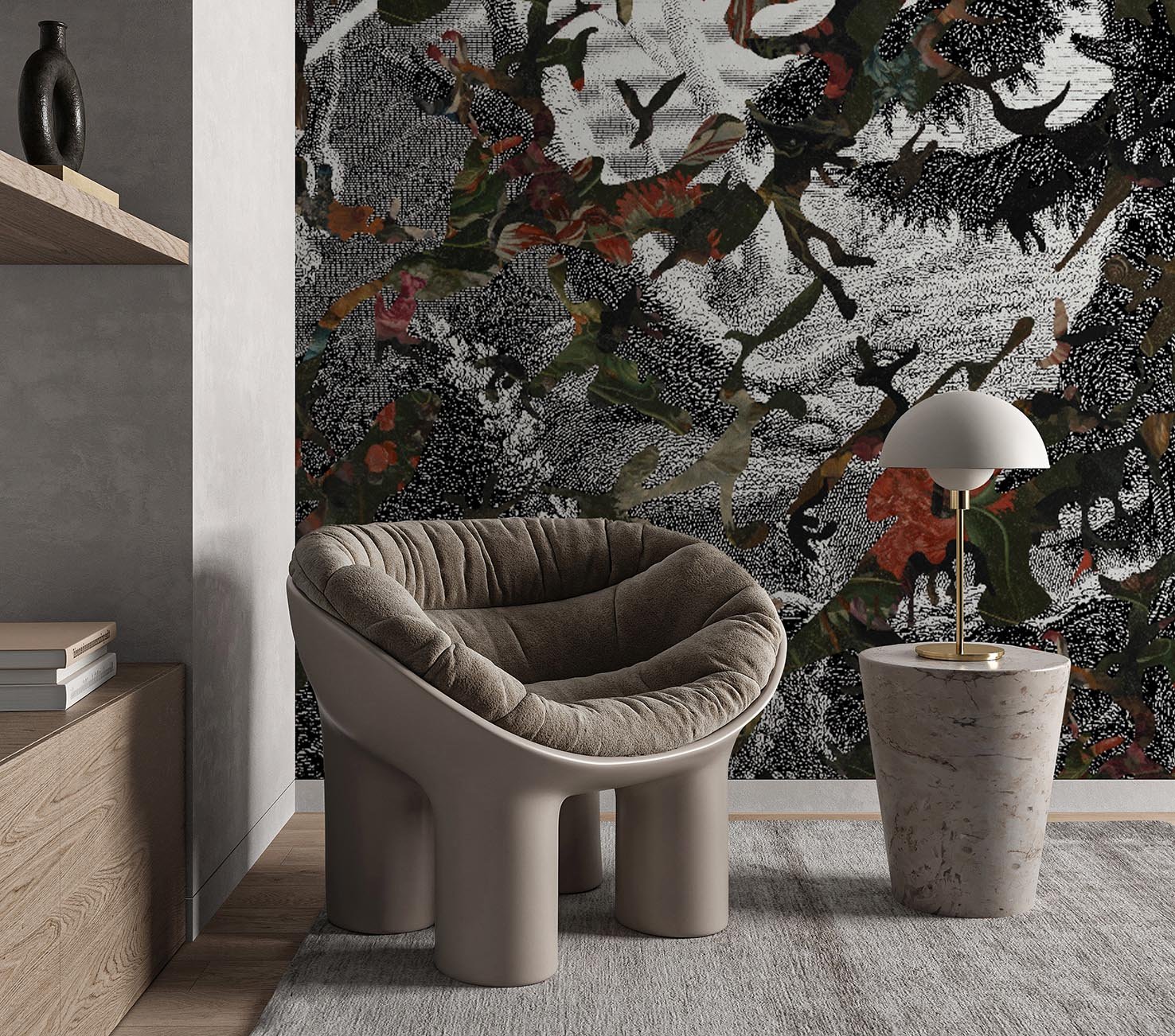
Paradis Perdu
Paradis Perdu, designed by Magnus Gjoen for MaVoix, is born from the encounter between literature, engraving, landscape, and graphic gesture.
Its starting point is a precious 1863 French edition of Paradise Lost — John Milton’s epic masterpiece — rediscovered by Gjoen at an antiquarian auction: 12 chapters, 21 engravings, a story of fall, desire, and fractured beauty.
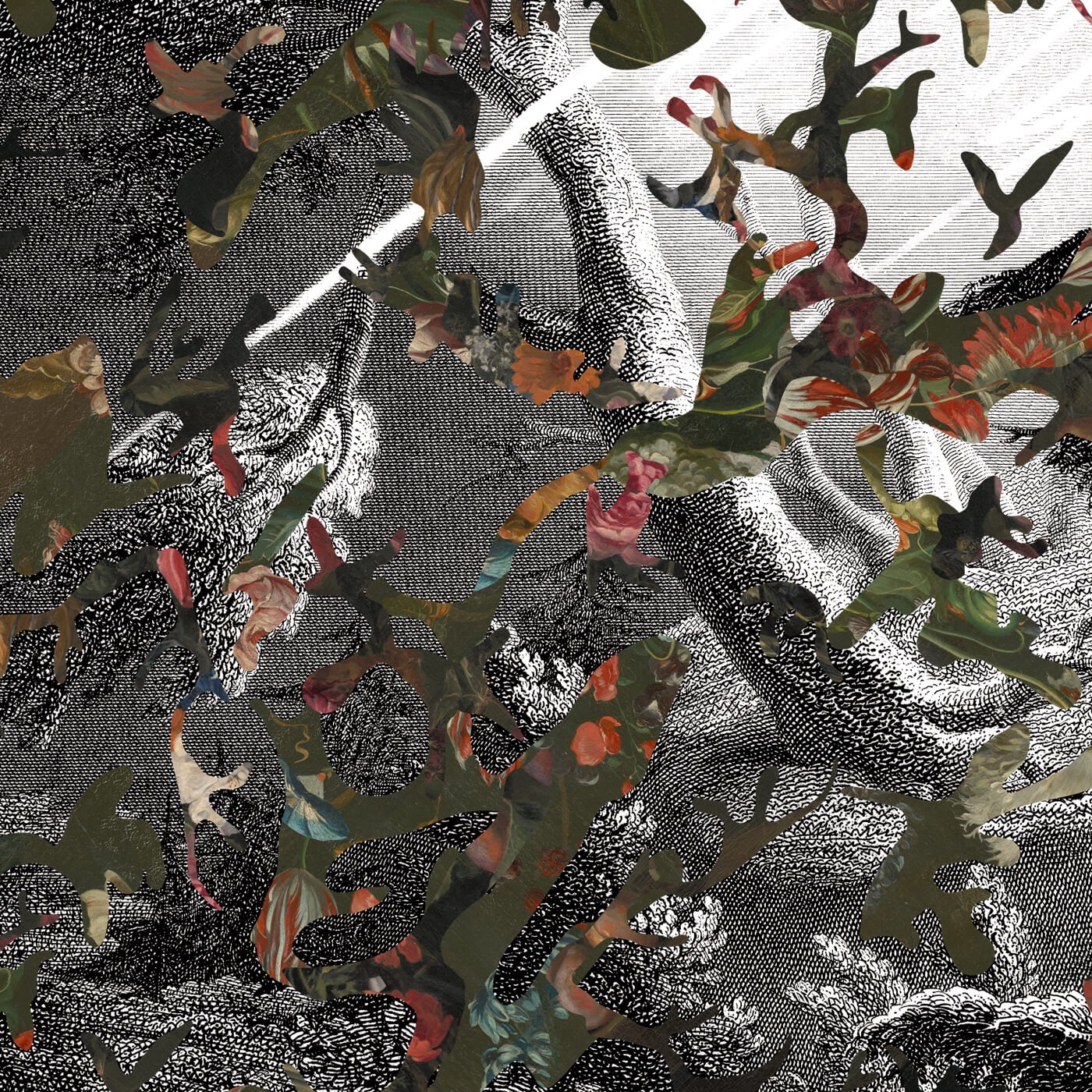
From this literary foundation, Gjoen builds a layered visual fresco, where 19th-century engraved lines are overgrown by surreal vegetation, as dense as a forest of visions.
Amid digital shadows and chiaroscuro, floral shapes and fragments of classical artworks emerge — hands, drapery, petals, folds — as if the history of art had merged with the living matter of the undergrowth.
Paradis Perdu is not decoration — it is a visual threshold, placing Baroque imagination, iconographic culture, and the contemporary aesthetic of camouflage in dialogue and tension.
Each fragment becomes a question, each void a space to inhabit with the gaze.
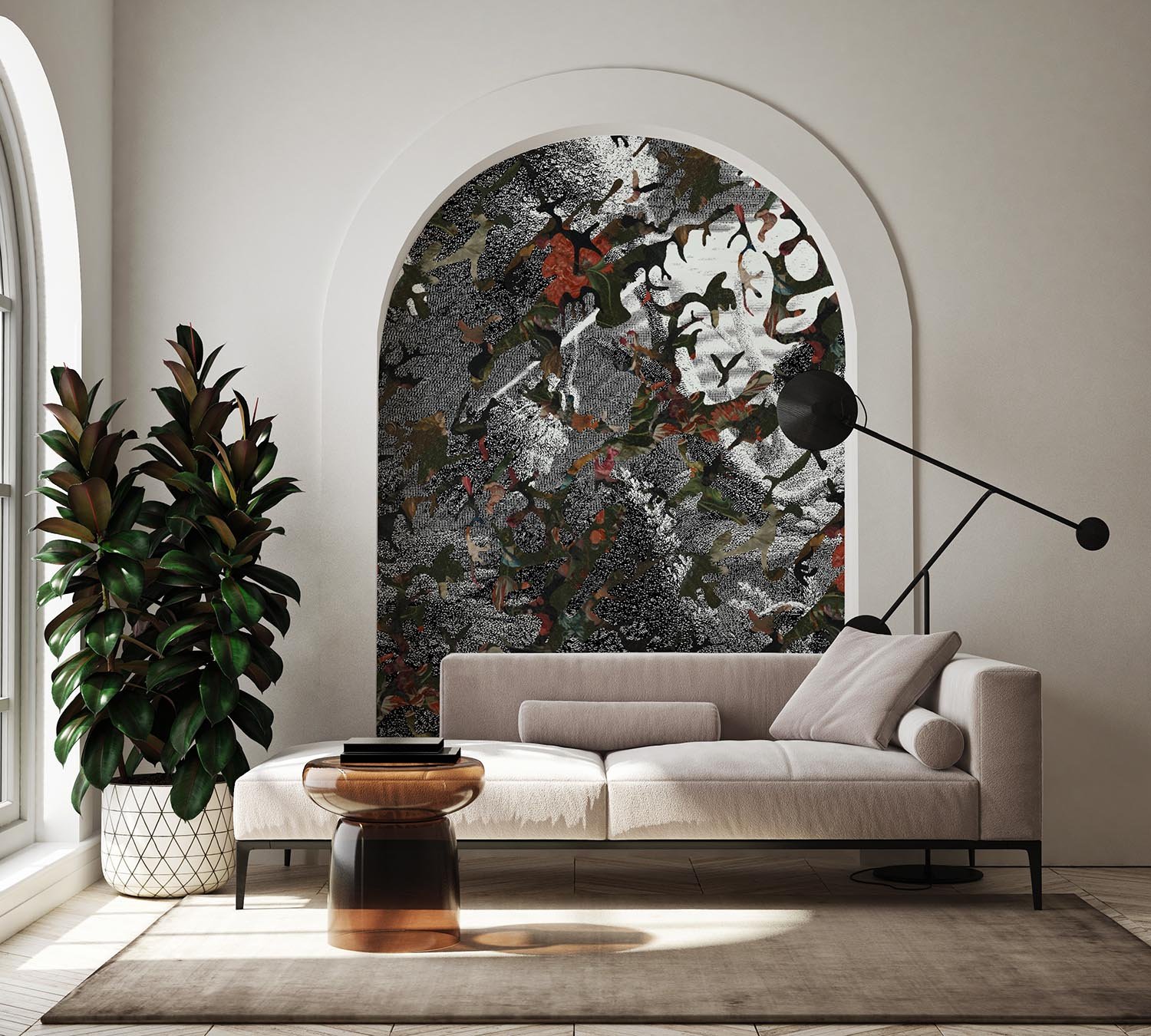
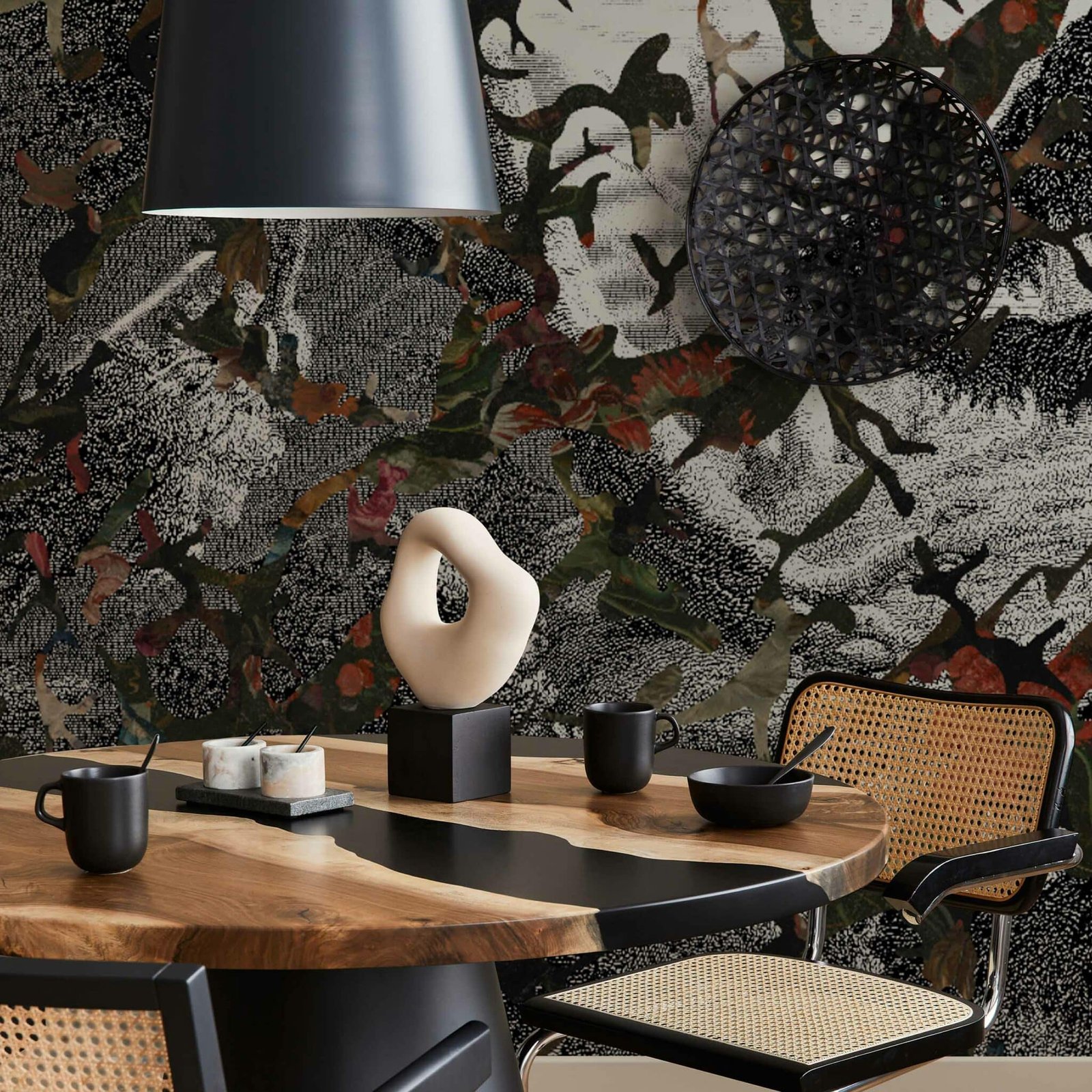
In this version, the background unfolds in an intricate grayscale palette, evoking a dense, monochromatic forest — a mute, stratified vegetation, almost engraved or printed onto the wall.
Within this black-and-white landscape, floral insertions in forest green, wine red, muted yellow, and matte flesh tones emerge — revealed through digital overlays and painterly references.
The result is a silent yet visually magnetic pattern, capable of evoking the sacred and the artificial, nature and culture, memory and oblivion.